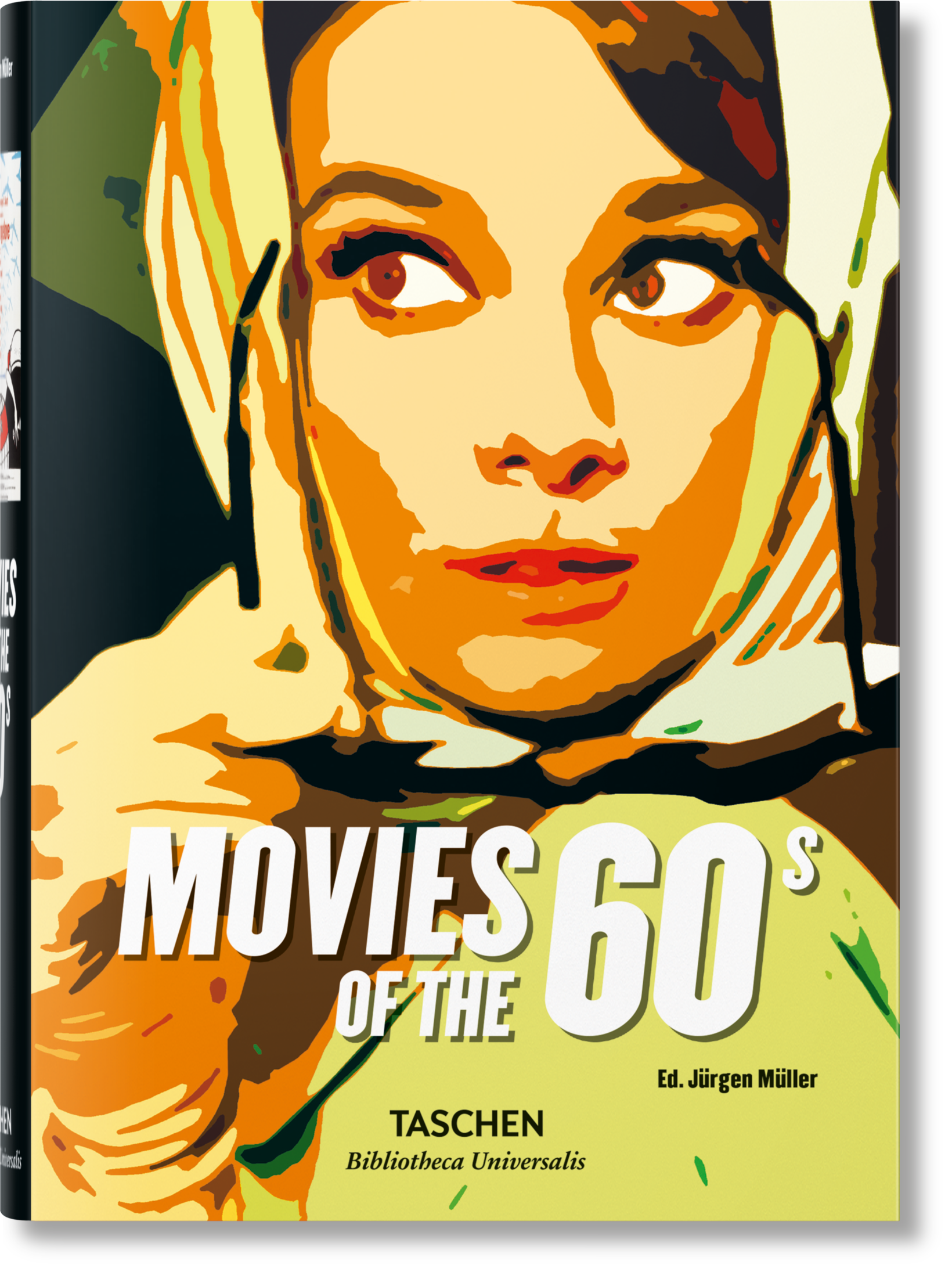
Movies of the 1960s
21.95 €
september 2019 (predobjednávka)
In true Pop Artstyle, movies of the 1960s blurred the lines between art, mass market, and pop cultureinto one vibrant cinematic decade. From Barbarella to Mrs. Robinson, James Bond to Jean-Luc Godard, this book gathers the must-see films of a transformational era, shaped by art form innovation, Spaghetti Westerns, sci-fi star turns, and important progress in female characterization.

Podrobnosti
| Autor |
Jürgen Müller |
|---|---|
| Vydavateľ |
TASCHEN
Hohenzollernring 53, 50672 Cologne, Germany
info@taschen.com
https://www.taschen.com/
+49 221 924 260
|
| Jazyk | anglický |
| Väzba | tvrdá |
| Počet strán | 752 |
| Formát | 14 x 19.5 cm |
| EAN | 9783836561136 |
| Rok vydania | 2019 |
| Edícia |
Film, televízia |
Positioned precariously between the uptight ’50s and the freewheeling ’70s, the 1960s marked a transitional decade in the film industry. As art, mass market, and pop culture merged and collided in true pop artstyle, cinema swirled with psychedelic energy. This handbook gathers the best films of the era,exploring the making and the mastery of such cinematic star turns as The Leopard, The Birds, Belle de Jour, A Fistful of Dollars, and Doctor Zhivago.
With audiences ever more glued to their TV sets and the loosened rules about what was “permissible” in cinema with the abolition of the Production Code, filmmakers embraced the freedom to explore the possibilities of film as an art form. As was often the case, the Europeans led the way, the French with Nouvelle Vaguedirectors like Godard and Truffaut,and the Italians with such innovative films as Fellini’s 8 1/2and Antonioni’s Eclipse.
By the mid-’60s the United States also began to exercise greater creative liberties, especially in films from young underground directors such as Russ Meyer, John Frankenheimer, and Sam Peckinpah. Meanwhile, Mary Poppinsand The Sound of Music ushered out the grandiose Hollywood musical era with a bang while the Spaghetti Westernbecame an instant phenomenon. Bond, James Bond, first appeared on-screenand Kubrick set new standards for sci-fi with 2001: A Space Odyssey.
Though the term “feminism” may not have been ready for prime time, the decade was also one of major advances in female characterization. From Jane Fonda’s Barbarellato Holly Golightly of Breakfast at Tiffany’sto Bonnie Parker of Bonnie and Clyde, it was the 1960s that saw women on-screen graduate from decorative accessories to complex, kick-ass personas.
With audiences ever more glued to their TV sets and the loosened rules about what was “permissible” in cinema with the abolition of the Production Code, filmmakers embraced the freedom to explore the possibilities of film as an art form. As was often the case, the Europeans led the way, the French with Nouvelle Vaguedirectors like Godard and Truffaut,and the Italians with such innovative films as Fellini’s 8 1/2and Antonioni’s Eclipse.
By the mid-’60s the United States also began to exercise greater creative liberties, especially in films from young underground directors such as Russ Meyer, John Frankenheimer, and Sam Peckinpah. Meanwhile, Mary Poppinsand The Sound of Music ushered out the grandiose Hollywood musical era with a bang while the Spaghetti Westernbecame an instant phenomenon. Bond, James Bond, first appeared on-screenand Kubrick set new standards for sci-fi with 2001: A Space Odyssey.
Though the term “feminism” may not have been ready for prime time, the decade was also one of major advances in female characterization. From Jane Fonda’s Barbarellato Holly Golightly of Breakfast at Tiffany’sto Bonnie Parker of Bonnie and Clyde, it was the 1960s that saw women on-screen graduate from decorative accessories to complex, kick-ass personas.
Autor
Jürgen Müller
Ďalšie knihy autora z oddelenia Knihy v angličtine




Podobné knihy